Hi all!
I hope everyone is well! I am almost done with my masters and how the time has flown by! I have done some really interesting research for my masters into performance horse conditions, management, injury and rehabilitation. So I thought I would share some of the information that I have gained from all my research! Please feel free to ask about any specific topic you may be interested in and I would be happy to do a blog post on it! This week I am looking at Exercise Induced Pulmonary haemorrhage in the performance horse! Let me know what you think!
 Introduction
The respiratory system is essential to the health and athletic performance of horses and sports horses. The sports horse and more specifically the event horse has huge physiological demands placed on them during training and competition. Horses respond to exercise and training in many different ways. As a result competition horses struggle with numerous physiological problems and disorders. They undergo rigorous training and competing throughout their career. Airway disorders are common among competition horses. Exercise Induced Pulmonary Haemorrhage (EIPH) has been reported as a major issue in the athletic horse. It is the most common abnormality affecting the horse during exercise. EIPH refers to the bleeding from blood vessels within the lungs during exercise. The condition has been reported worldwide in many types of equine athletes. Sports horses such as racehorses, barrel racing horses, polo ponies, event horses and show jumpers have all show signs of EIPH during intense exercise. EIPH has been documented throughout history, and there are only a few treatments available, although there is no known cure for this airway disease at present. EIPH is commonly thought to contribute to exercise intolerance, loss of stamina and performance. It is considered to be a major cause of reduced athletic performance as well as being detrimental to performance. Most studies have indicated that the prevalence of EIPH increases with a horses age. Further studies are needed into other disciplines in order to determine prevalence of EIPH in different disciplines other than racing.
Pathogenesis of EIPH
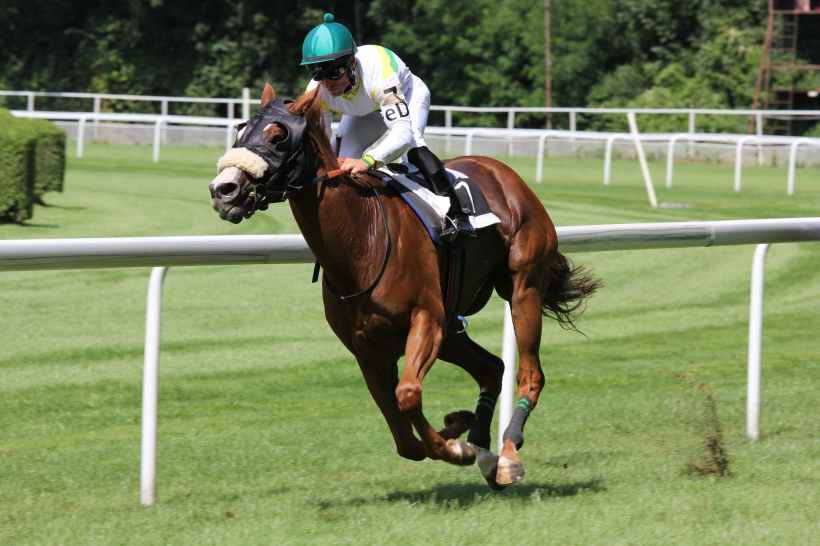
EIPH is seen by most authorities as a disease or disorder. Although Mazan 2018 discussed that EIPH may be considered a problem of physiology rather mandated by the development of the horse as a superb athlete than a disease. It is still argued amongst professionals as to what label is best for EIPH. EIPH was originally diagnosed by visible epistaxis (blood at the nostrils) and was considered a serious problem but relatively rare until other methods of diagnosis were further developed. EIPH is evaluated mostly using tracheobronchoscopy or bronchoalveolar lavage or both. Diagnosis of EIPH can be difficult, and hard to pinpoint if EIPH is prevalent or not. Endoscopy involves the use of an endoscope that has a camera on one end to observe if bleeding occurs in the respiratory tract. Tracheal lavage involves detection of EIPH through the presence of hemosiderophages in the fluid aspirated. Determining when the haemorrhage occurred is quite difficult. EIPH is graded on a 0-4 scale with 0 being no evidence anywhere in the respiratory tract of bleeding and 4 being severe bleeding. In severe cases the condition can manifest as epistaxis, the appearance of blood from the nostrils. EIPH pathology is characterised by occlusive remodelling of pulmonary veins. Birks et al 2010 found that approximately 75% of post endoscopic examinations had blood scores of 1,2,3, or 4 regardless of breed. Studies have shown that its prevalence is related to intensity of exercise rather than the duration of exercise or breed of the horse. This presents the idea that short intense exercise such as flat races and sprinters are more at risk than long distance races or endurance races. This supports the findings that racehorses who do a lot of fast work and sprint training have a high occurrence rate of EIPH. EIPH is alveolar capillary wall stress failure caused by exercise induced pulmonary hypertension. Stress failure of the pulmonary capillaries is the generally accepted cause of EIPH.
The amount of haemorrhage in most horses is minimal but the recurrent damage may ultimately render the horse susceptible to future bleeding. Mazan 2018 studied the lungs of a horse with chronic EIPH in a post mortem examination and found gross abnormalities in the form of gun-metal discoloration that were easily seen on the dorsal border of the lung. They also found that racehorses with severe EIPH tend to run faster in the first part of the race and racehorses with milder EIPH tend to take over during the later part of the race. They commented how this may help to improve racing strategies or may reflect the inevitably of this disease in the racehorse. Mazan 2018’s findings show that there is a visible impact on the lungs of horses with EIPH when observed post mortem and that by observing performance, specialists may be able to observe and predict what horses have EIPH from race performance. Both Crispe and Morley’s findings support the fact that racehorses with EIPH do encounter a loss of performance when competing. This can be taken into eventing, as epistaxis has been observed in the event horse at competitions. There has been little research done into EIPH in the event horse and as such there is a gap in knowledge.

Prevention/Treatment
Currently there is no known cure for EIPH. There are two common treatment methods, the use of the dieuretic furosemide and the use of nasal dialators or nasal strips. Furosemide is legal to administer in the United States to racehorses before racing but not currently in the UK. There have been conflicting results on the effectiveness of furosemide in reducing EIPH. Hinchcliff et al 2009 looked at EIPH in thoroughbred racehorses and found that prerace administration of furosemide decreased the incidence and severity of EIPH in thoroughbreds racing under typical conditions in South Africa. Nearly 75% of all thoroughbreds are given furosemide before races in the United States. In contrast Kynch et al 2017 found that was no difference between EIPH scores in horses having received furosemide and the control horses given saline. Birks et al 2010 also found from endoscopic examination, that after endoscopic examination 75% of horses had scores of 1,2,3 or 4 regardless of Furosemide administration. If furosemide helps with reduction of EIPH or not is still not known for sure.

Another prevention measure or treatment used for EIPH, are nasal dilators or strips. Nasal strips are similar to the anti-snoring strips used by people. Nasal strips work by implementing three plastic support bands that are adhered on the horse’s skin on the fleshy parts of the nasal passage. The supports utilise spring force to aid in opening the nostril during inspiration and lessen the building pressure during exercise. Nasal strips reduce nasal resistance airflow and studies have reported significant reduction in the severity of EIPH with the use of nasal strips during treadmill exercise. Nasal strips are increasingly used over the drug furosemide and have numerous studies supporting their use as they are a non-pharmaceutical treatment option for EIPH. Howard Erickson conducted at least eight studies looking into nasal strip use and effectiveness. He found that nasal strips did help to combat and limit EIPH in the racehorse. Studies have shown that nasal strips decrease the effort of breathing, and therefore leads to the reduction in pressure that then reduces the incidence of EIPH. Further research is needed into other treatment and prevention options, but also into prevalence of EIPH in the event horse. As horses that do short bursts of intense exercise are at risk of EIPH.
I hope you enjoyed reading this information on EIPH! Please let me know your thoughts and if you have a certain topic you would like me to cover let me know!
Thank you!
Until next time!
Sophie
References
- Silva, K., Otaka, J., Gonçalves, C., Silva, E., Alencar, N. and Lessa, D. (2017). Association between exercise-induced pulmonary hemorrhage and inflammatory airway disease in polo ponies. Journal of Equine Science, 28(2), pp.55-59.
- Marlin, D. and Nankervis, K. (2013). Equine Exercise Physiology. New York, NY: John Wiley & Sons.
- McGowan, C. (2008). Clinical Pathology in the Racing Horse: The Role of Clinical Pathology in Assessing Fitness and Performance in the Racehorse. Veterinary Clinics of North America: Equine Practice, 24(2), pp.405-421.
- Casey, R. (2007). Clinical Problems Associated with the Intensive management of Performance Horses. The Welfare of Horses, 1, pp.19-44.
- Davidson, E. and Martin, B. (2003). Diagnosis of upper respiratory tract diseases in the performance horse. Veterinary Clinics of North America: Equine Practice, 19(1), pp.51-62.
- Hinchcliff, K., Couetil, L., Knight, P., Morley, P., Robinson, N., Sweeney, C. and van Erck, E. (2015). Exercise Induced Pulmonary Hemorrhage in Horses: American College of Veterinary Internal Medicine Consensus Statement. Journal of Veterinary Internal Medicine, 29(3), pp.743-758.
- Mazan, M. (2018). Lower Airway Disease in the Athletic Horse. Veterinary Clinics of North America: Equine Practice, 34(2), pp.443-460.
- Crispe, E., Lester, G., Secombe, C. and Perera, D. (2017). The association between exercise-induced pulmonary haemorrhage and race-day performance in Thoroughbred racehorses. Equine Veterinary Journal, 49(5), pp.584-589.
- Doucet, M. and Viel, L. (2002). Alveolar Macrophage Graded Hemosiderin Score from Bronchoalveolar Lavage in Horses with Exercise-Induced Pulmonary Hemorrhage and Controls. Journal of Veterinary Internal Medicine, 16(3), pp.281-286.
- Léguillette, R., Steinmann, M., Bond, S. and Stanton, B. (2016). Tracheobronchoscopic Assessment of Exercise-Induced Pulmonary Hemorrhage and Airway Inflammation in Barrel Racing Horses. Journal of Veterinary Internal Medicine, 30(4), pp.1327-1332.
- Gold, J., Knowles, D., Coffey, T. and Bayly, W. (2018). Exercise-induced pulmonary hemorrhage in barrel racing horses in the Pacific Northwest region of the United States. Journal of Veterinary Internal Medicine, 32(2), pp.839-845.
- Poole, D. and Erickson, H. (2016). Exercise-induced pulmonary hemorrhage: where are we now?. Veterinary Medicine: Research and Reports, Volume 7, pp.133-148.
- Epp, T., McDonough, P., Padilla, D., Gentile, J., Edwards, K., Erickson, H. and Poole, D. (2006). Exercise-induced pulmonary haemorrhage during submaximal exercise. Equine Veterinary Journal, 38(S36), pp.502-507.
- Kindig, C., McDonough, P., Fenton, G., Poole, D. and Erickson, H. (2001). Efficacy of nasal strip and furosemide in mitigating EIPH in Thoroughbred horses. Journal of Applied Physiology, 91(3), pp.1396-1400.
- Manohar, M., Hutchens, E. and Coney, E. (1994). Frusemide attenuates the exercise-induced rise in pulmonary capillary blood pressure in horses. Equine Veterinary Journal, 26(1), pp.51-54.
- Knych, H., Wilson, W., Vale, A., Kass, P., Arthur, R. and Jones, J. (2017). Effectiveness of furosemide in attenuating exercise-induced pulmonary haemorrhage in horses when administered at 4- and 24-h prior to high-speed training. Equine Veterinary Journal, 50(3), pp.350-355.
- Derksen, F., Williams, K. and Stack, A. (2011). Exercised-Induced Pulmonary Hemorrhage in Horses: The Role of Pulmonary Veins. Compendium: Continuing Education for Veterinarians, pp.E1-E6.
- Manohar, M. and Goetz, T. (1996). Pulmonary vascular pressures of exercising Thoroughbred horses with and without endoscopic evidence of EIPH. Journal of Applied Physiology, 81(4), pp.1589-1593.
- Birks, E., Durando, M. and McBride, S. (2003). Exercise-induced pulmonary hemorrhage. Veterinary Clinics of North America: Equine Practice, 19(1), pp.87-100.
- Birks, E., Shuler, K., Soma, L., Martin, B., Marconato, L., Piero, F., Teleis, D., Schar, D., Hessinger, A. and Uboh, C. (2010). EIPH: postrace endoscopic evaluation of Standardbreds and Thoroughbreds. Equine Veterinary Journal, 34(S34), pp.375-378.
- Derksen, F., Williams, K., Pannirselvam, R., Feijter-Rupp, H., Steel, C. and Robinson, N. (2009). Regional distribution of collagen and haemosiderin in the lungs of horses with exercise-induced pulmonary haemorrhage. Equine Veterinary Journal, 41(6), pp.586-591.
- Langsetmo, I., Fedde, M., Meyer, T. and Erickson, H. (2010). Relationship of pulmonary arterial pressure to pulmonary haemorrhage in exercising horses. Equine Veterinary Journal, 32(5), pp.379-384.
- Mazan, M. (2018). Lower Airway Disease in the Athletic Horse. Veterinary Clinics of North America: Equine Practice, 34(2), pp.443-460.
- Walter, R. and Fagan, J. (2015). Preventing EIPH in Racehorses Using Nasal Strips Instead of Lasix. Undergraduate. Rutgers University.
- Allen, K. and Franklin, S. (2010). Comparisons of overground endoscopy and treadmill endoscopy in UK Thoroughbred racehorses. Equine Veterinary Journal, 42(3), pp.186-191.
- Velie, B., Raadsma, H., Wade, C., Knight, P. and Hamilton, N. (2014). Heritability of epistaxis in the Australian Thoroughbred racehorse population. The Veterinary Journal, 202(2), pp.274-278.
- Sullivan, S. and Hinchcliff, K. (2015). Update on Exercise-Induced Pulmonary Hemorrhage. Veterinary Clinics of North America: Equine Practice, 31(1), pp.187-198.
- Morley, P., Bromberek, J., Saulez, M., Hinchcliff, K. and Guthrie, A. (2014). Exercise-induced pulmonary haemorrhage impairs racing performance in Thoroughbred racehorses. Equine Veterinary Journal, 47(3), pp.358-365.
- Hinchcliff, K., Morley, P. and Guthrie, A. (2009). Efficacy of furosemide for prevention of exercise-induced pulmonary hemorrhage in Thoroughbred racehorses. Journal of the American Veterinary Medical Association, 235(1), pp.76-82.
- Poole, D. and Sexton, W. (2016). Howard H. Erickson: contributions to equine exercise physiology and veterinary medicine. Comparative Exercise Physiology, 12(1), pp.55-62.
- Parente, E. (2018). Upper Airway Conditions Affecting the Equine Athlete. Veterinary Clinics of North America: Equine Practice, 34(2), pp.427-441.
- McGowan, C. (2008). Clinical Pathology in the Racing Horse: The Role of Clinical Pathology in Assessing Fitness and Performance in the Racehorse. Veterinary Clinics of North America: Equine Practice, 24(2), pp.405-421.
 Sophie Hulme Equestrian