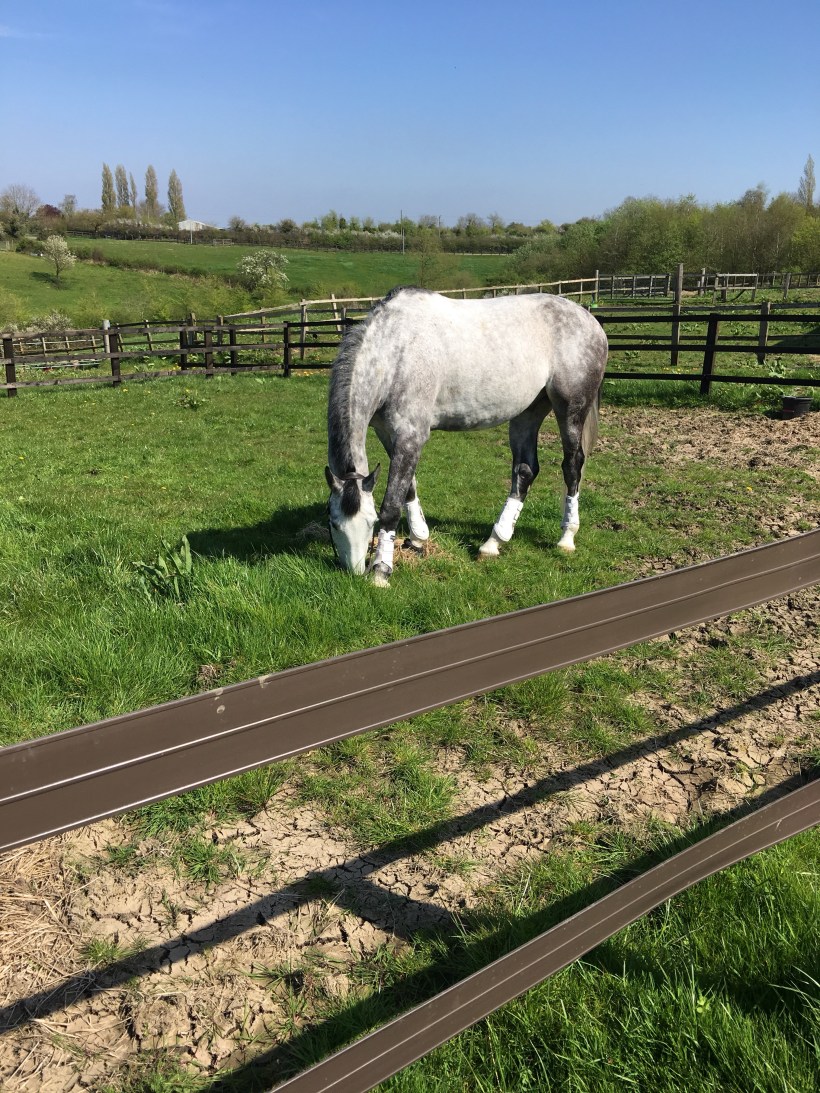
So for all of you who may not know I have written this blog post as apart of the equine science blog series. This post will go over the equine Gastro Intestinal Tract (GIT) and it will be part 1 of a mini series to go over the basics of equine nutrition for not only horses in general but also competition horses.Lets start with their digestional tract. Horses are hind gut fermenters which means fermentation breakdown of food happens in the hind gut, not the stomach. As a lot of owners know horses can not throw up so it is crucial for the health of the horse that they be fed appropriately to avoid compaction problems as well as colic. Colic is an avoidable problem but yet it still is a very current issue with horses. With the right understanding of equine management and nutrition can help avoid it.
The functions of the horses GIT tract are:
Ingestion
Mastication
Digestion
Fermentation
Absorption
Elimination
The horse does three types of breakdown of food:
Mechanical breakdown- Mouth
Chemical breakdown- Stomach and Small Intestine
Microbial breakdown- Large Intestine, Small Colon and Caecum
Did you know that the horse has a large caecum to help with fermentation of food? Horses intestines are meters long due to the fact that this is where the fermentation and nutritional absorption takes place.
The horses stomach is small. It is roughly the size of a rugby ball and for those of you who do not know what that is it is a 9-15L capacity. A horses stomach cannot expand like a humans to any amount of food given which is why horses cannot handle big meals well. Food generally stays in the stomach for around 2 hours.It has 4 different regions:Saccus caecusCardiac regionFundic regionPyloric regionThe stomach can also be divided into glandular and non- glandular. Protein digestion takes place in the stomach and the HCL (Hydro choleric acid ) is 1-2. The non-glandular region does not have protection from acid so Gastric ulcers can occur from acid splashing into the non glandular region. This is why when feeding our horses there has to be a balance of food entering the stomach in order to avoid acid production and therefore splashing which results in ulcers.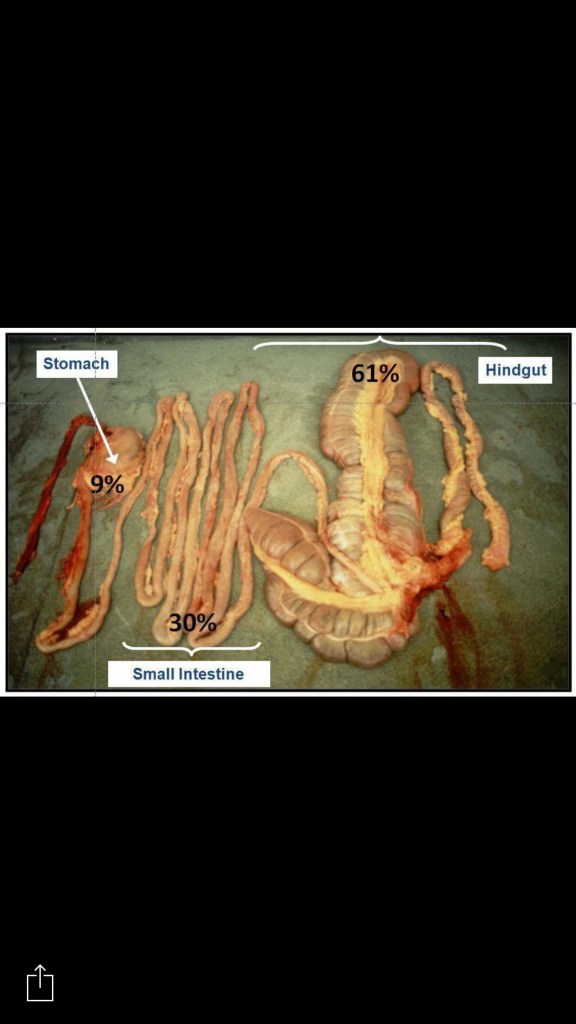
The small intestine is 22 meters long and 64 litre capacity the rate of passage is 30cm/minute = 73 minutes. Fat, protein, and simple sugars are absorbed in the small intestine as well as vitamins A,D,E and minerals calcium, magnesium, phosphorus, sodium, potassium.The Large intestine is where microbial fermentation of fibre takes place. Gas can build up in this section due to uneven amounts of food and build up which is why horses need to have consistent feeding. Anything not digested in the small intestine gets digested in the large intestine. Microbial fermentation efficiency is determined by the adaptation of the GIT microbes to different feed types. The rate of passage is around 42.7 hours and 33.8 hours respectively for solid and liquid digest when horse is given hay and concentrate (Hard feed) diet, and 21-40 hours for hay based diet.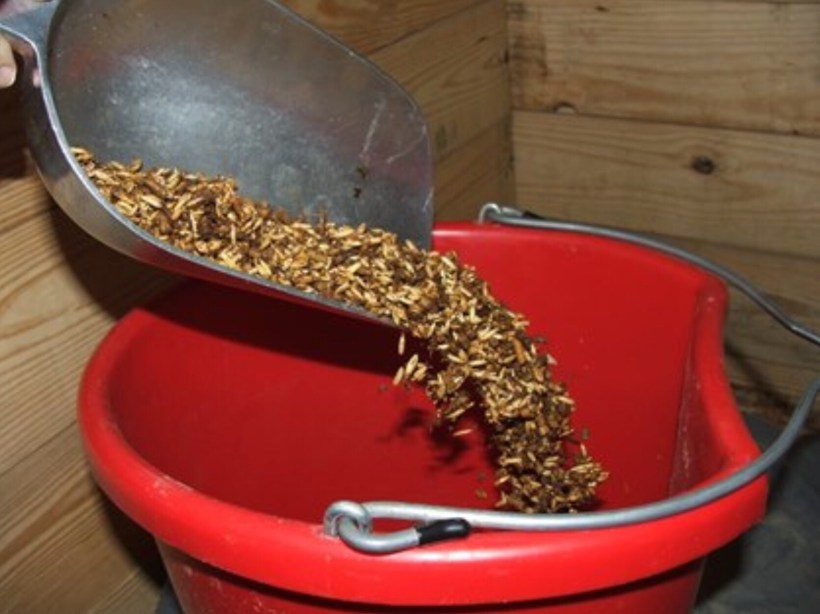
Now you know the basics of the Horse’s GIT tract and how they digest their food. The next step is looking at rationing which is the process by which the horse is provided with a diet that fulfills its nutrient requirements. In part 2 of Intro to Equine nutrition I will explain rationing. Please if you have any questions, do not hesitate to comment or contact me! Or if you want a specific subject covered let me know! Until Next time!
 Sophie Hulme Equestrian