Hello!
Well I thought this would be a very interesting topic to talk about. So Body Condition Scoring and the difference between body weight will be the topic of this post.
Body Weight – is the horses actual weight
Body weight can be measured by a weight tape, weigh bridge, or calculated using a formula. Although out of all of these methods the weigh bridge is the most accurate. But you need to take care as to when you weigh your horse as if you weigh soon after exercise it can skew the results as it depends how much the horse has sweat when exercising.
Body condition scoring : Is a visual assessment, based on measurements in peer reviewed research, of adipose deposits on specific areas of the horse.
Body condition scoring does not tell us about fitness of the horse. It only tells the rider/owners whether the weight is appropriate for the horse or not.
You can not determine fat unless you feel and run your hands over fat deposits , it is also very easy to mistake muscle for fat as well as the other way around, you are also not taking muscle condition into account when you are body condition scoring.
When Body condition scoring the key areas to look at are: Neck, back , hips and tail head.
Body condition scoring can help with welfare as obesity is a big problem in horses, it also helps look at skinny malnourished horses and where the line is.
There are 2 main different Body Condition Scoring methods:
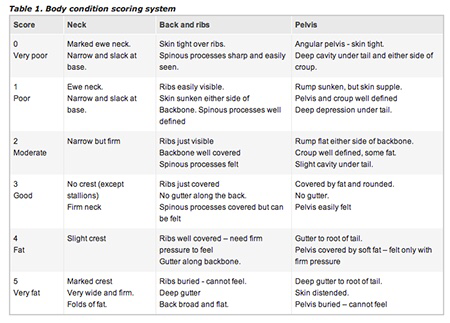
Carroll and Huntington (1988)
0-5 scale
Neck, back and ribs, pelvis
Optimum 3-3 1/2
More of a generic scale
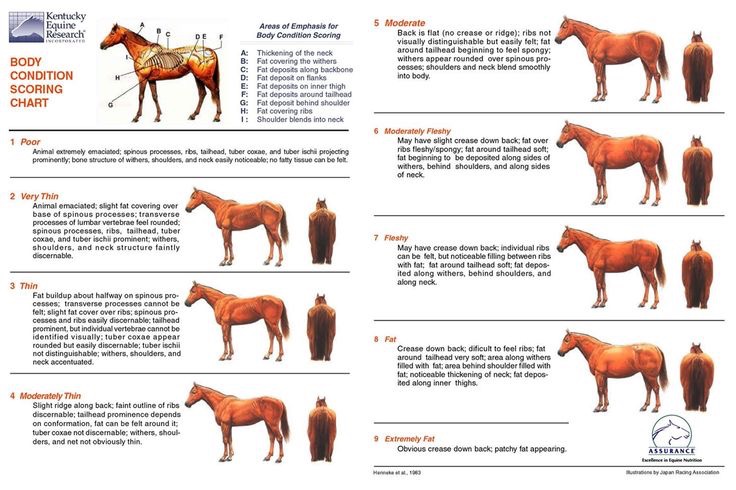
Henneke et al (1983)
1-9 scale
Neck, withers, loin, tail head, ribs, shoulder
Optimum is 4-6
Developed with quarter horses
A key thing to remember is it very much depends on the breed with the different scales and it also depends on how the breed puts down their fat deposits. If you are ever concerned about the health of your horse and their body condition score it is always best to either call your vet or consult a nutritionist.
References:
Equine Nutrition lecture by Dr. Heike Brown and google for images.
 Sophie Hulme Equestrian